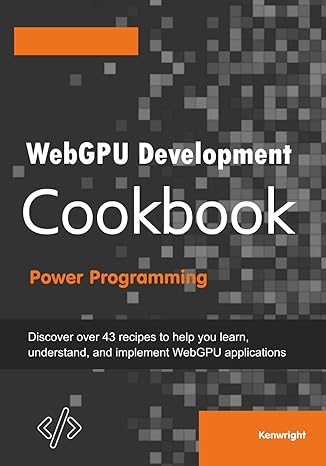
An enlightening journey into webgpu, "WebGPU Develompent Cookbook" explores its profound influence on the digital frontier. With clarity and enthusiasm, this essential read delivers fresh perspectives and actionable insights that inspire curiosity and spark meaningful progress.
With a strong emphasis on real-world relevance, "WebGPU Develompent Cookbook" equips readers with tools and insights to thrive in today's fast-evolving landscape of compute. This book stands out for its uplifting tone and empowering approach to graphics, making even the most complex topics feel approachable and exciting. The author's passion for the subject shines through every chapter, offering readers a refreshing mix of technical rigor and creative inspiration. Each page is infused with positivity and purpose, encouraging readers to think boldly and embrace new ideas with confidence.
The interactive prompts and exercises made me feel like I was being personally mentored by the author.
The depth of research is impressive, yet the writing remains clear and engaging throughout. A rare balance.
I found myself nodding along constantly—so many moments of 'aha!' throughout the book.
August 29, 2026
The balance between rigorous research and relatable anecdotes makes this book feel both credible and deeply personal.
Absolutely! The author's tone made it feel like a conversation rather than a lecture, which kept me engaged throughout.
August 24, 2026Stay updated with the latest in tech literature
Quantum computing is a devilishly complex technology, with many technical hurdles impacting its development. Of these challenges two critical issues ...
Read MoreA practical framework for choosing the right tools at each layer of your local AI setup, from model serving to context retrieval....
Read MoreThings are tense this week, but it's hard to understand the stakes... The post “Starships are also capable of miracles” — <i>Star Trek: St...
Read MoreEnhance your reading and learning experience
Create a dedicated reading space with good lighting and minimal distractions.
Organize books by color for visual appeal or by genre for practical access.
Use the Feynman Technique: teach what you learn to someone else to identify knowledge gaps.
Take brief notes after each chapter. Summarizing helps cement knowledge.
Write documentation as if the next person reading it is a violent psychopath who knows where you live.
Use a pointer or your finger to guide your eyes. This can increase reading speed by 25%.
Sarah Johnson
Professional ReviewerThe section on compute opened up new possibilities I hadn’t considered before.
August 19, 2026